Purple Mehndi Lehenga: How to Style Mahrang for a Modern Mehndi
A purple mehndi lehenga is the modern alternative to classic yellow and green. Here is how to style one, from...
A purple mehndi lehenga is the modern alternative to classic yellow and green. Here is how to style one, from...
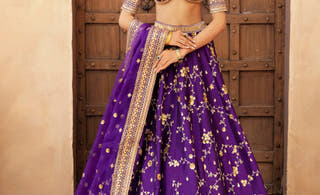
Purple is the mehndi colour people ask about when they are tired of seeing the same yellow and green in every photo. It is festive, it glows under fairy lights, and it sits comfortably next to almost any colour the bride chooses. Mahrang, a violet-purple lehenga choli from our Madhubala collection, is our answer to that request, for Pakistani and Indian weddings alike. This guide looks at purple from two sides: wearing it as the bride, and wearing it beside her.

A bride in purple looks deliberate. Against a stage dressed in marigold and green, violet becomes the focal point without needing extra embellishment. It also gives the mehndi a different mood from the barat, so the two sets of photos do not look like the same day. Indian brides are choosing it for the mehendi and sangeet for the same reason.
The tear-drop mirrors are what make Mahrang work at night. Round mirrors give a steady sparkle; tear-drops flash as you turn, so the lehenga looks alive in dance videos and in candid shots taken under warm lights.
Purple is one of the easiest colours for a sister or bridesmaid, because it rarely clashes. Here is how it sits next to the most common bridal mehndi colours:
| If the bride wears | How purple looks next to her |
|---|---|
| Yellow or mustard | The strongest contrast: purple and yellow sit opposite each other on the colour wheel, so both look brighter in group photos. |
| Green | A rich, jewel-toned pairing that suits evening events and dholkis. |
| Red | Works best if the sisters keep their jewellery in silver, so the bride's gold stays the warmest tone in the frame. |
| Pastels | Purple gives depth to the group without taking attention from a soft bridal look. |
If several sisters or cousins want to coordinate, one can wear Mahrang while the others pick lighter lilac or pink shades from our mehndi dresses. A single deep tone in a group of lighter ones photographs better than everyone in the same colour.

Cool metals let violet glow. Silver, white gold and polki set in silver are the safest choices, and pearls repeat the pearl work on the choli. If you love gold, pick an antique or rose finish rather than bright yellow.
White motia and jasmine look crisp against purple. For something less expected, try lilac blooms or small orchids in a low bun.
Pin it on one shoulder for dancing, so the neckline and sleeve borders stay visible, and bring it over the head for the mehndi ritual and close-up portraits. For a Sikh jaago, where the dancing goes on late into the night, pin it securely on both shoulders.
Plum or mauve eyes with a little silver shimmer, and a berry or soft pink lip. Daytime dholkis need less: rosy cheeks and a glossy nude-pink lip are enough.

Not in a bright violet like Mahrang. In daylight it reads as a clear, lively colour rather than a dark one. Keep the makeup and jewellery light, and the look stays fresh.
Yes. Violet holds its colour under warm yellow lights, which can wash out paler shades, and the mirror work adds movement to videos. Ask your photographer to catch a few shots as you turn.
It can work if the shades are clearly different, such as the bride in Mahrang's deep violet and the sister in a pale lilac. Two identical purples at the same event tend to blend into each other in photos.
Colour changes can be discussed on WhatsApp before you order, so we can confirm what is possible on this design.
Want a warmer look instead? Compare Mahrang with the red Mastani, which brides also wear at the barat, or the midnight blue Shahnaaz, another cool tone that loves silver. For the full picture, read our guide to the best mehndi dresses of 2026.
Cart
Your cart is currently empty.
Start ShoppingSelect options