

Zarafshan Red Barat Lehenga Choli: Design, Handwork and Styling
Zarafshan is a red and antique gold barat lehenga choli in net, worked with zardozi and dabka. What goes into...
Zarafshan is a red and antique gold barat lehenga choli in net, worked with zardozi and dabka. What goes into...
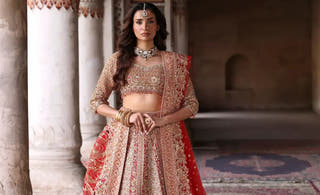
Zarafshan is a traditional red lehenga choli for the barat, from our Vyah Diyan Tyaariyan collection. It is a three-piece set in net, in rich red with antique gold, and is hand-worked with zardozi, dabka, sequins, crystals and pearls. The name means "scattering gold", which describes the way the metallic work covers the outfit.

Zardozi is raised metallic embroidery, worked in metal thread, and it gives a bridal outfit its weight and shine. Dabka is fine coiled wire, cut to length and stitched down piece by piece, which gives a textured, three-dimensional finish. On Zarafshan the two are combined with sequins, crystals and pearls, so the surface catches light from every angle.

The lehenga is full-flared and worked with zardozi, sequins, crystals, pearls and dabka. The volume is what gives a barat lehenga its presence on stage.

The choli is heavily embellished with zardozi, dabka, crystals, pearls and sequins and cut for a structured fit. It can be made to your own measurements.
The red net dupatta has a richly embroidered border and delicate all-over embellishment, so it can be pinned over the head for the nikkah or rukhsati and still drape well.

Red has been the colour of the Pakistani bride for generations, and for many families the barat is the one function where nothing else will do. It is also forgiving in photographs: it holds its depth under strong lights and flash. Antique gold work, rather than bright yellow gold, gives Zarafshan a slightly heritage feel. For how the barat fits with the rest of the wedding, see our guide to dresses for each wedding function.

A barat lehenga this heavily worked needs a base that can carry embroidery without turning stiff. Net is light, so zardozi and dabka can cover it densely while the skirt still flares and moves. It also lets light pass through the dupatta, so the veil glows instead of looking flat.

Pin the dupatta over your head at the crown and let the embroidered border frame your face for the nikkah and the first portraits. Add a second dupatta on the shoulders if you want a fuller look.
Stay in antique gold, polki or kundan: a long rani haar, jhumkas, a heavy matha patti or jhoomar, and a nath if you wear one. Matching the metal to the zardozi keeps the whole look calm and royal.
A classic red or deep berry lip, warm bronze eyes and a matte base that photographs well under flash. A low bun with fresh motia suits the old-world mood.
Unpin the front and let the dupatta fall back as a train for the walk out, one of the most photographed moments of the day. Gold khussas are the practical choice, since you will stand and walk a lot.

For the Anand Karaj, pin the dupatta securely, since you will sit and bow on the floor more than once. For the pheras, the long train adds drama as you walk around the fire. Zarafshan also suits the reception at both.
Zarafshan is made to order in our Lahore atelier and takes 10 to 12 weeks including delivery. We ship free worldwide, by TCS in Pakistan and DHL or SkyNet abroad; import duty, where it applies, is paid by the customer, and our country guides for the USA, UK, Canada and UAE explain what to expect. Questions about fit: WhatsApp +92 310 0001250. For cuts and fit in general, read our bridal lehenga guide, or see the other designs in our Vyah Diyan Tyaariyan guide.
It is designed for the barat. Some brides also wear it for a combined nikkah and rukhsati on the same day.
Raised embroidery in metallic thread, traditionally used on bridal wear for its weight and shine.
The handwork gives it real weight, but the net base keeps it lighter than the same work on velvet or raw silk, so you can sit, stand and walk through a long evening.
Yes, at our studio at 39-A MM Alam Road, Gulberg III, Lahore. Send a short WhatsApp message before you come so we can have it ready.
At least three months before the wedding: Zarafshan takes 10 to 12 weeks including delivery.
View Zarafshan, browse our red bridal lehengas and Bridal Couture, or read how to style the red Simran and the maroon Sargun.
Cart
Your cart is currently empty.
Start ShoppingSelect options