Pakistani Wedding Dress Trends 2026: The Complete Bridal Style Guide
The 2026 Pakistani bridal trends in one guide: colours by function, lehenga, gharara and gown styles, embroidery, fabrics, dupatta styling...
The 2026 Pakistani bridal trends in one guide: colours by function, lehenga, gharara and gown styles, embroidery, fabrics, dupatta styling...
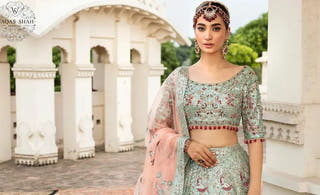
Pakistani wedding dress trends in 2026 are lighter, more personal and more careful with colour than they were a few years ago. Red is still the barat favourite, but it now shares the season with ice mint, pistachio, champagne and rust. Heavy embroidery has not gone away either; it has simply moved to where it matters most, the neckline, the waist and the dupatta border.
This guide to the 2026 bridal trends brings together what we are seeing in our Lahore atelier this season: the colours brides are asking for, the silhouettes, the embroidery and fabrics, how to dress for each wedding function, and how to plan your order so it arrives on time. Every example below is a real piece from our collection.
Three shifts stand out this year.
Colour is the first decision most brides make, and in 2026 there is more choice than ever.
Classic reds, deeper. Red remains the most requested barat colour, but the shades are deeper: wine, maroon, rust and a red with a hint of burgundy. These tones photograph well under evening lights and suit heavy gold work. A good example is the Mastani red lehenga, with tilla embroidery, dabka and a pearl-embellished choli with a scooped neckline.

Soft pastels. Ice mint, pistachio, blush, peach and powder blue have become serious bridal choices, especially for nikkah, walima and daytime weddings. Jahanara is an ice mint net lehenga choli finished with dabka, crystals, pearls and sequins, paired with a net dupatta with a four-sided embellished border.

Jewel tones. Emerald green, antique gold, copper rust and deep plum offer a regal alternative to red. Many brides now combine two tones in one outfit, such as the mustard gold and blue of Maha Rani, a raw silk lehenga choli with silk thread embroidery in peach and red, gota, pearls, naqshi, dabka and zardozi, finished with heavy geometric cuffs. Gurleen, in a deep cinnamon rust brown, brings the same warmth to a winter mehndi or nikkah.

| Function | Colours brides are choosing |
|---|---|
| Mayun and mehndi | Yellow, mustard, orange, rust, green, purple, hot pink, multicolour |
| Nikkah | White, off-white, ivory, champagne, blush, soft gold |
| Barat | Red, maroon, wine, deep rust, emerald |
| Walima and reception | Pastels, silver, champagne, pistachio, powder blue, pink |
The bridal lehenga choli is still the first choice for most brides in 2026. What has changed is the cut: cleaner panels, structured cholis and lighter skirts. Naz Bano shows the direction well. The lehenga is worked in sequins and thread with florals, cage designs and small bird motifs; the choli carries multicolour beadwork, zardozi and crystals on the front, back and sleeves; and the champagne brown dupatta has a four-sided border with booti chatta.

For a softer look, Firoza Bano uses aqua sequin fabric with resham floral motifs, a hand-embellished round neckline, a deep back with tassels and elbow sleeves in naqshi, dabka and crystals.

The gharara and sharara have come back strongly, especially for mehndi and nikkah. A gharara is fitted to the knee and flares out below it; a sharara flares from the waist. Both feel traditional, and both are easier to move in than a full lehenga.
A floor-length pishwas gives the bride a fitted bodice and a flowing skirt in one piece. It suits nikkah and daytime events, and works well for brides who want a modest silhouette with plenty of movement.
Open-front gowns worn over a lehenga or trouser are now a common walima and reception choice. Roshanara is a pistachio green net gown with crystals, sitara, sequins and dabka, worn over a tissue lehenga with a heavy border. More styles are in our wedding gown collection.

Handwork is still what separates couture from ready-made. These are the techniques you will see most on 2026 bridal wear:
Three newer directions sit on top of these. 3D florals add texture that shows beautifully in photos. Tonal embroidery, where the thread matches the fabric, gives a quiet, expensive look. And crystals and sequins are placed with care rather than scattered everywhere. Shahrbanu combines floral zardozi, crystals and mirror work this way.

Mahrang takes mirror work further, with hand-placed teardrop mirrors across a violet lehenga and a neckline in pearls, dabka and crystals.

| Fabric | Why brides choose it | Best for |
|---|---|---|
| Organza | Holds shape and volume while staying light | Dupattas, lehenga overlays, summer and daytime events |
| Net | Builds volume without weight; delicate, feminine finish | Lehengas, gowns, dupattas |
| Tissue | Soft shimmer and fluid drape | Lehengas under gowns, walima |
| Raw silk | Structured and durable; supports heavy handwork | Cholis, barat lehengas |
| Velvet | Rich texture and warmth; deepens jewel tones | Winter weddings, including in the UK and Canada |
In 2026 the dupatta often defines the whole look. A red dupatta worked in Swarovski crystals, naqshi, dabka and resham can carry an outfit on its own.

Mehndi is about colour, mirrors and movement. Choose something you can dance in. Mehar Bano, in green with sequins, threadwork, dabka and an organza dupatta, is a good example. See more in our mehndi dresses and the full mehndi dress guide.

Aabroo is another strong mehndi choice: rust tones, golden tilla florals and sequins, a neckline in pearls, naqshi, dabka and crystals, and lehenga panels divided with gotta patti.
For a mustard mehndi there is Zari, for olive green Mahira, for the mayun itself orange Aarohi, and for an evening mehndi midnight blue Shahnaaz.
Nikkah looks are soft and graceful. Gul Bano pairs a white sequin lehenga with flowers, birds and peacock motifs in resham, a hand-worked choli with zardozi and crystals, and a peach organza dupatta with a centre jaal. Shahtaaj is a white raw silk lehenga choli with mirror work, for a bride who wants a little sparkle at her nikkah. Browse all nikkah dresses or read our nikkah lehenga guide.

The barat outfit is the centrepiece of the wedding, and the place for your richest colour and heaviest handwork. Deep reds, maroon and wine remain the safest choice, as in the deep red Simran; emerald and black are bolder alternatives. Zarqa Bano is a black bridal lehenga with zardozi, pearls, crystals and 3D sequin motifs, paired with a green organza dupatta. Explore all Pakistani bridal dresses or the wider wedding dress collection.

Walima calls for understated luxury: pastels, silver and champagne, often in a gown or a lighter lehenga. Bahar Bano is a pink sequin lehenga choli with a floral choli, halter neckline and elbow sleeves in zardozi, resham and crystals. More options are in our reception dresses.

For a function-by-function breakdown with more outfit types, see our guide to barat, mehndi, nikkah and walima dresses.
Every Pakistani wedding dress we sell is made to order in our Lahore atelier and shipped worldwide, free and tracked, by TCS in Pakistan and DHL or SkyNet abroad. If you are ordering from abroad, our country guides explain duty, sizing and timing for the USA, the UK, Canada, Australia, the UAE and Europe. For a consultation, message us on WhatsApp at +92 310 0001250 or follow new pieces on Instagram.
Lighter couture in organza, net and tissue; embroidery placed on the choli, waist and dupatta border rather than everywhere; deeper reds alongside pastels such as ice mint, pistachio and champagne; and more personalised designs.
Yes, for the barat. The shades are deeper, such as wine, maroon and rust, and many brides now choose pastels for nikkah and walima instead of red throughout.
The bridal lehenga choli is still the most popular choice, now with cleaner panels, structured cholis and lighter skirts. Ghararas, shararas and open-front gowns are the main alternatives.
Raw silk and velvet for structure, heavy handwork and winter weddings; organza, net and tissue for lighter outfits and summer or daytime events.
A lehenga is a flared skirt worn with a choli and dupatta. A gharara is a pair of wide trousers fitted to the knee and flared below it, usually with a joint at the knee decorated with lace or embroidery.
At least three months before the wedding for bridal couture, which takes 10 to 12 weeks including delivery. If your date is closer, message us before ordering.
Yes. Most designs can be changed in colour, neckline, sleeves and dupatta, and are made to your measurements at no extra cost.
Most pieces are made to order, so we do not accept returns for change of mind. If an item arrives defective or incorrect, report it within 5 days of delivery with photos and we will put it right. Full details are in our Refund Policy.
Cart
Your cart is currently empty.
Start ShoppingSelect options